Strategy with Soul
Plan With Intention: When Numbers Feel Like a Verdict on Your Worth
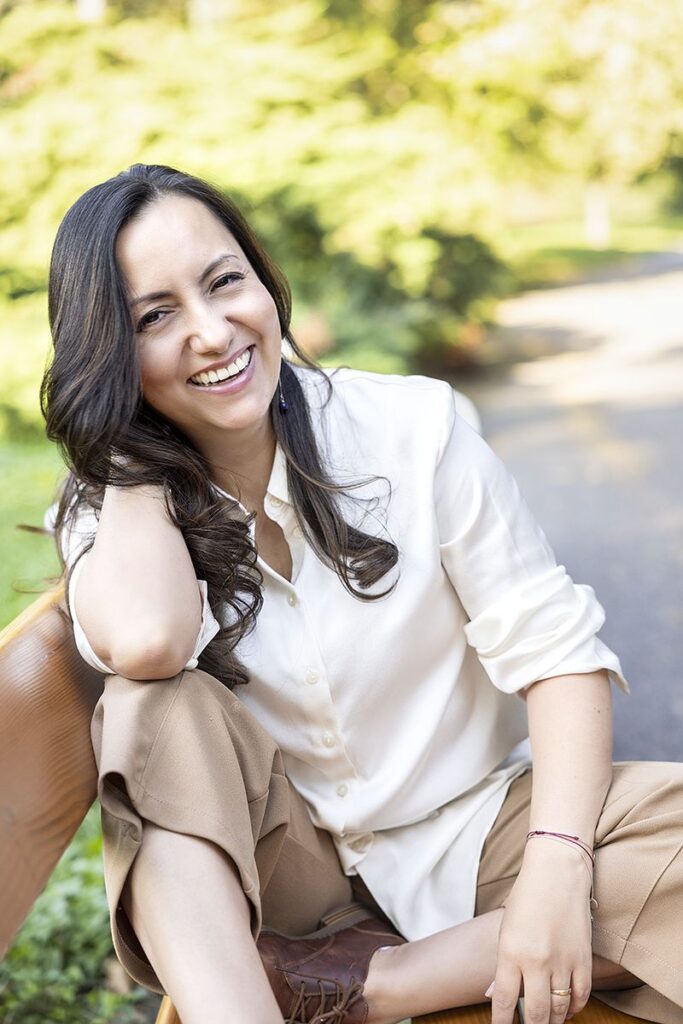
When I first started my business in Austria, I felt deeply unsure about the value of my work.
On paper, I had experience. I had completed my PhD and spent many years working in Colombia, the UK, Palestine and Turkey. I had built a career in marketing, branding and communications.
But I had not yet built that career in Austria.
And that made me question myself in ways I hadn’t expected.
Doing my first business proposals felt like a nightmare. I didn’t know how much to charge, and I always felt that whatever number I put on the page was somehow “wrong.” I usually undercharged because I thought that if I made my services cheaper, I would attract more clients.
So, unsurprisingly, creating my first business plan wasn’t easy.
It wasn’t difficult because I didn’t know maths or how to plan a business. I had learned these things many times through courses and workshops.
It was difficult because the business plan forced me to put a number on what I needed to earn in order to survive in a system where I didn’t yet feel that I belonged.
I didn’t speak German.
I didn’t understand all the rules.
I didn’t have an established network.
I didn’t know how things worked.
I didn’t feel included.
And somehow, I felt that I had to prove that I deserved to charge for my experience.
My first business plans were hard.
Very hard.
Sometimes I avoided the process altogether because it was uncomfortable.
And today, I understand why.
Founders don’t avoid their numbers because they can’t do maths. They avoid them because numbers can feel like a verdict on their worth.
It happened to me.
And I know it happens to many of us.
Numbers Are Not a Verdict
So, what do we do with this?
Numbers are fundamental to our businesses. We need to know what we earn, what we spend, what we need to sell, what is working and what isn’t.
But we also need to learn how to look at our numbers without turning them into a judgment of ourselves.
We need key indicators that help us measure what we are doing with self-love and compassion.
A number can tell you that your offer isn’t profitable.
It doesn’t tell you that you aren’t good enough.
A number can tell you that you need more clients.
It doesn’t tell you that your work isn’t valuable.
A number can tell you that your strategy needs to change.
It doesn’t tell you that you have failed.
Numbers are information.
They are feedback.
They are a tool to help us make better decisions.
And when we learn to look at them this way, business planning becomes much less frightening.
Building a Business in a Country That Isn’t Your Own
When we start a business in a country that is not our own, there is another dimension to consider.
Austria has many wonderful opportunities, but if you are new to the country, the entrepreneurial ecosystem can take time to understand. The rules, language, networks and ways of doing business can feel unfamiliar.
We need to have a lot of self-compassion.
We need to adapt.
We need to learn.
And we need to give ourselves time.
We also need to understand how the system can work for us, in the same way that we are working hard to understand and navigate the system.
We cannot expect everything to happen in the short term.
Sometimes building a business here requires patience, consistency and long-term thinking.
You need to plan.
But not just plan for the sake of having a plan.
Plan with intention. Plan with your heart.
Your Business Needs to Fit Your Life
For me, seeing the big picture of my business was also about seeing the big picture of my life.
I needed clarity about where I wanted to go, but I also needed to be honest about how I wanted to live.
I wanted to create a balance between motherhood and business.
I wanted enough time to be present for my children without constantly overworking.
And that meant putting constraints around my business from the beginning.
This was not easy for me.
I had spent many years working 60 or 70 hours a week in Colombia. Working hard was something I knew how to do very well.
But I didn’t want to build my life that way anymore.
I wanted a lifestyle where my business worked well for me.
I wanted to be able to dedicate time to playing with my children, being present with them and experiencing these first years of their lives.
For the last five years, that has not been negotiable.
My first priority has been to spend as much time as I can with them, especially while they are little.
And I don’t want to change that.
So my business plan had to work around my life, not the other way around.
My First Plan Was to Become Known
Once I understood this, my strategy became clearer.
Nobody in Austria knew me.
I didn’t know many people either.
So my first plan was to grow my personal brand and my network.
I needed to become visible.
I needed to build relationships.
I needed people to understand who I was, what I knew and what I could contribute.
And that became a long-term process.
I also understood quite early that digital products could play an important role in the kind of business I wanted to build.
So I started learning everything I could about funnels, digital marketing and online business.
I experimented.
I learned.
I changed things.
I tried again.
And my business continued to evolve.
Listen to Your Intuition, but Don’t Build in Isolation
Throughout this journey, my intuition kept telling me something very strongly:
Go out there and share your message.
I knew there were ideas I had developed through my research, professional experience and life experience that could benefit other people.
So I started my YouTube channel.
I co-founded Emprende Austria.
I created and participated in different initiatives and communities.
And so much of what exists in my business today can be traced back to that initial decision I made five years ago: to become visible, build relationships and share what I knew.
But there is one important lesson I learned along the way.
A plan cannot exist in isolation.
Your Clients Are Part of the Plan
The most important aspect of planning is understanding that your business needs to connect with what people actually need and want from you.
For a plan to work, it has to work within a reality that you build with your clients and the people around you.
You don’t build a business in isolation.
You need people to co-create your brand.
You need people to challenge your assumptions.
You need people to tell you what resonates and what doesn’t.
You need clients to help you shape your offer, your message and ultimately your promise.
This has probably been the most important lesson I have learned through my work with communities.
If you want to grow sustainably, you need to be open to working with other people, and you need to do it from the heart.
Sometimes it doesn’t work.
Sometimes it is frustrating.
Sometimes collaboration is difficult.
Sometimes people disappoint us.
But most of the time, opening ourselves to relationships, collaboration and co-creation is exactly what we need to make our businesses work and grow.
Planning Is Not About Predicting the Future
Looking back at my first business plan, I can see how much it has changed.
Not because the original plan was wrong.
Because I changed.
My circumstances changed.
My children grew.
My network grew.
My confidence grew.
My business evolved.
My understanding of the market evolved.
And the needs of the people I work with evolved too.
That’s why I don’t see business planning as a rigid document that tells you exactly what the next five years will look like.
I see it as a compass.
It helps you understand where you are going while giving you enough space to adjust when reality gives you new information.
You need the big picture.
You need the numbers.
You need strategy.
But you also need intuition.
You need to listen to your clients.
You need to listen to yourself.
And you need the courage to change direction when something no longer feels right.
Planning is not about controlling the future. It is about creating clarity so you can respond to the future with intention.
Plan With Your Heart
Today, business planning has become a key part of my own life and something I genuinely love sharing with other entrepreneurs.
Because I know how uncomfortable it can feel.
I know what it is like to look at a number and wonder if it says something about your worth.
I know what it is like to build a business in a new country and feel that you are constantly trying to understand the rules.
And I also know that clarity can bring something incredibly valuable:
peace of mind.
When you know where you are going, you don’t have to make every decision from fear.
When you understand your numbers, you can make decisions with greater confidence.
When you know what your business needs, and what your life needs, you can create a strategy that is sustainable.
And when you remain open to the people around you, your business can become something much bigger than the plan you initially imagined.
So, if you are currently avoiding your business plan, perhaps don’t start by asking:
“How much should I earn?”
Start by asking:
What kind of business do I want to build?
What kind of life do I want that business to support?
Who do I want to serve?
What do they need from me?
What does my business need to become sustainable?
Then look at the numbers.
Not as a verdict.
But as a guide.
Not with fear.
But with curiosity.
Not with judgment.
But with self-compassion.
Plan with intention.
Plan with clarity.
Plan with your heart.
Ready to Create Your Own Plan?
Business planning is one of the key tools I use to create clarity, align my vision and make intentional decisions about my business and my life.
I’ve created a free Business Plan Guideline to help you start looking at your business from the bigger picture and turn your ideas into a more intentional plan.
And if you want to build the whole year with me, join Yearly Plan With Heart, my annual planning workshop. Three live sessions in November, in Spanish, German or English, where we look back honestly, reconnect with what truly matters, and turn it into a plan for a business that works for the life you actually want.
Your numbers matter.
Your vision matters.
And so does the life you are building along the way.
Lorena ✨